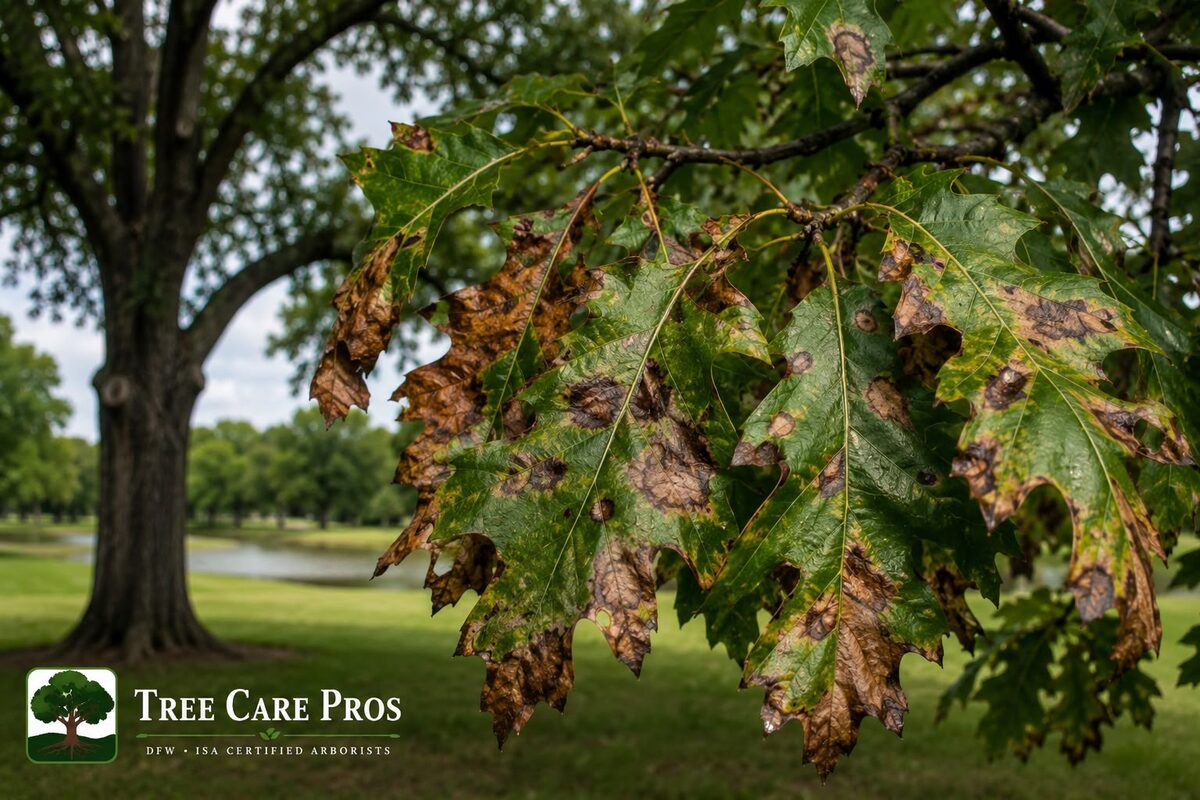
Anthracnose is a general term used to describe a group of fungal diseases caused by several different pathogens that attack leaves, buds, shoots, and young twigs.
The disease develops when fungal spores infect newly emerging foliage during periods of cool, wet weather. Once established, the fungus begins damaging leaf tissue and reducing the tree’s ability to efficiently conduct photosynthesis.
Unlike vascular diseases that disrupt internal water transport, anthracnose primarily affects the photosynthetic surfaces of the tree. Severe infections can reduce the amount of healthy leaf tissue available for energy production, causing noticeable canopy thinning and stress.
Certain species are particularly susceptible to anthracnose infections throughout North Texas.
Commonly affected species include:
- Southern Live Oak
- Red Oak
- Shumard Oak
- White Oak
- Sycamore
- American Elm
- Cedar Elm
- Ash
- Maple
- Dogwood
The severity of symptoms often depends upon weather conditions, tree vigor, species susceptibility, and overall environmental stress.
Common symptoms include:
- Brown leaf lesions
- Irregular leaf spotting
- Leaf curling
- Distorted foliage
- Premature leaf drop
- Twig dieback
- Sparse canopy development
- Delayed foliage production
- Necrotic leaf tissue